先说结论。它和通用视觉自监督的关系在于:用同一物理世界模型统一深度、NVS、对象操控等 3D 视觉任务。 高相关;详见方法、贡献和实验边界。
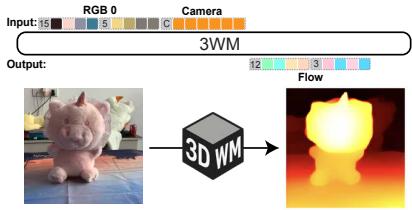
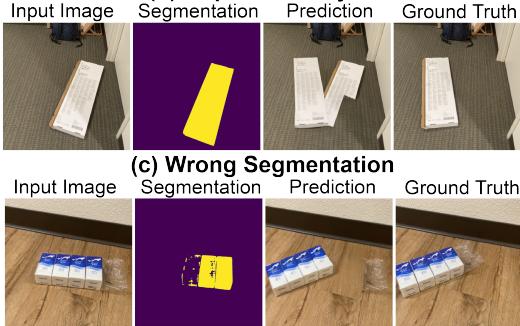
Optical Flow as Target: Depth Estimation Figure 2: Flexible inference pathways across modaOptical Flow as Target: Depth Estimation Figure 2: Flexible inference pathways across modalities. Our framework allows us to flexibly construct inference pathways for 3D scene understanding. Using optical flow tokens as conditioning, the model performs image editing by generating the next RGB frame. Conversely, when optical flow tokens serve as the prediction target, the model enables depth estimation by predicting the next flow field from a single RGB image and in-plane camera motion input.这张图概括 Unified 3D Scene Understanding Through 的整体方法流程。阅读时先看模块之间传递的训练信号,再看作者如何把目标拆成可优化的子问题。(b) Duplicated Object Figure 11: Additional qualitative examples illustrating current limi(b) Duplicated Object Figure 11: Additional qualitative examples illustrating current limitations. (a) Motion blur: Because the model is trained on real videos, it sometimes reproduces motion-induced blur when large object displacements are present. This behavior is consistent with the training distribution but may be undesirable for fine-grained manipulation. (b) Object duplication: The model may occasionally generate a duplicated copy at the original location. (c) Segmentation errors: For rigidobject manipulation, incorrect input segmentation leads to incorrect zero-flow constraints, causing unpredictable or distorted outcomes.这张图/表用于判断 Unified 3D Scene Understanding Through 的实验收益来自哪里。重点看替换、消融或跨模型设置下趋势是否一致,而不是只看单个最高分。