通用视觉自监督研究报
A Daily Digest of Visual Self-Supervised Learning
2026-05-28 图像表征 · VFM · JEPA · 视频预训练
ICML 2026 · P0 · 2026-05-28

FoundObj:它和通用视觉自监督的关系在于:用自监督 2D/3D foundation models 作为 reward,做无场景标注 3D object discovery

高相关;详见方法、贡献和实验边界。

编号2605.27178 优先级P0 类别ICML 2026 会议arXiv + ICML 2026 方法用自监督 2D/3D foundation models 作为 reward,做无场景标注 3D object discovery 来源arXiv / OpenReview

先说结论。它和通用视觉自监督的关系在于:用自监督 2D/3D foundation models 作为 reward,做无场景标注 3D object discovery。 高相关;详见方法、贡献和实验边界。
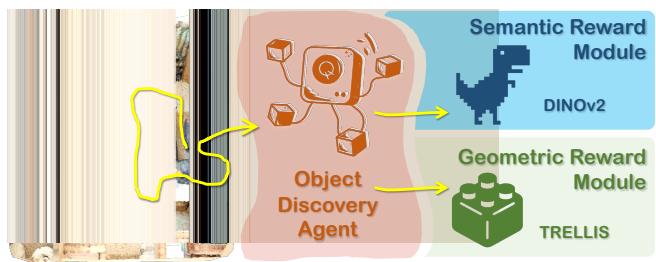
Figureure 1 · Overview of our method.
Figureure 1 · Overview of our method.Figure 1. Overview of our method.这张图概括 FoundObj 的整体方法流程。阅读时先看模块之间传递的训练信号,再看作者如何把目标拆成可优化的子问题。
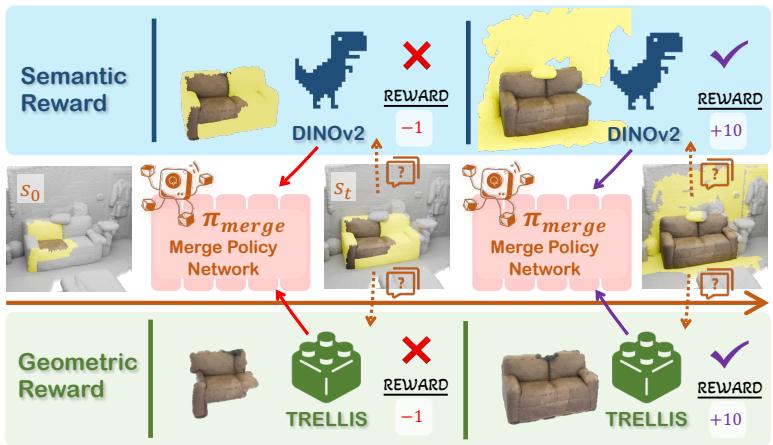
STEP #2: Neighboring Superpoint Merging Figure 3
STEP #2: Neighboring Superpoint Merging Figure 3STEP #2: Neighboring Superpoint Merging Figure 3. Workflow of our object discovery agent. Given an input 3D scene composed of initial superpoints, our object discovery agent begins by selecting a seed superpoint and then progressively merges neighboring superpoints, guided by feedback from geometric and semantic reward modules based on self-supervised 2D/3D foundation models.这张图来自论文 PDF 的结构化抽取。当前用于辅助理解 FoundObj 的方法或实验,请结合正文精读段落一起看。

核心问题

它和通用视觉自监督的关系在于:用自监督 2D/3D foundation models 作为 reward,做无场景标注 3D object discovery。

方法拆解

用自监督 2D/3D foundation models 作为 reward,做无场景标注 3D object discovery

主要贡献

高相关;详见方法、贡献和实验边界。

实验看点

实验部分建议重点看两类证据:一是作者是否把方法收益和更强数据、更长训练、更大模型区分开;二是跨模型、跨数据或跨任务迁移是否还能保留同样趋势。

局限与读法

这篇论文的结论需要结合任务设置、训练数据规模和消融实验一起看;不要只凭单个指标判断它对通用视觉表征的价值。