通用视觉自监督研究报
A Daily Digest of Visual Self-Supervised Learning
2026-05-29 图像表征 · VFM · JEPA · 视频预训练
Visual SSL / representation · P0 · 2026-05-29

From Pixels to Words --:它和通用视觉自监督的关系在于:原生 pixels-to-words one-vision 模型,直接挑战“预训练视觉 encoder + LLM adapter”的主流 VLM 拼接范式

高相关;详见方法、贡献和实验边界。

编号2605.28820 优先级P0 类别Visual SSL / representation 会议arXiv 方法原生 pixels-to-words one-vision 模型,直接挑战“预训练视觉 encoder + LLM adapter”的主流 VLM 拼接范式 来源arXiv / OpenReview

先说结论。它和通用视觉自监督的关系在于:原生 pixels-to-words one-vision 模型,直接挑战“预训练视觉 encoder + LLM adapter”的主流 VLM 拼接范式。 高相关;详见方法、贡献和实验边界。

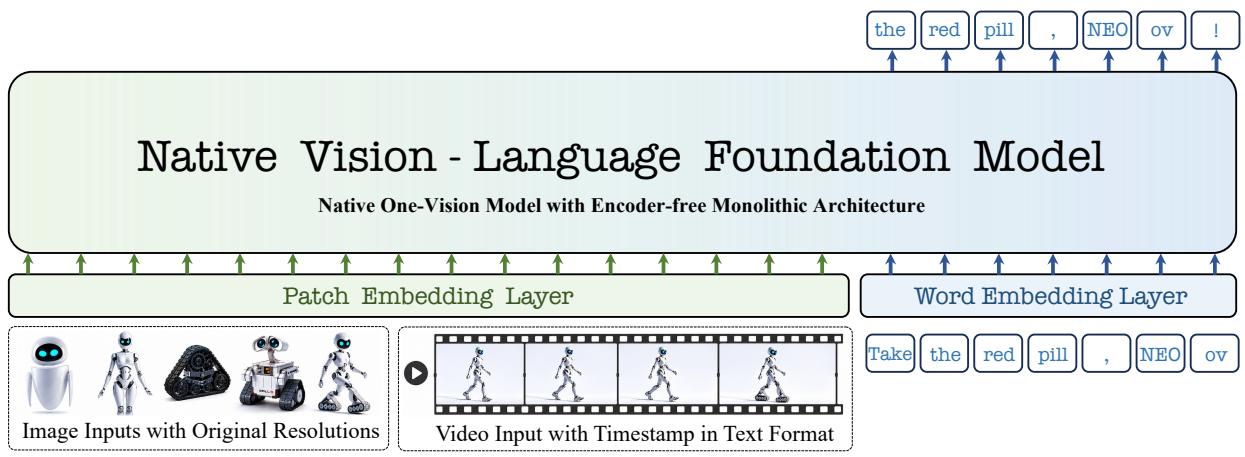
Figureure 1 · : Overview of the NEO-ov model
Figureure 1 · : Overview of the NEO-ov modelFigure 1: Overview of the NEO-ov model. Image or video inputs and text are encoded into token sequences via lightweight patch and word embeddings, then processed within a single decoder-only backbone composed of stacked native primitives, enabling efficient pixel–word and pixel–pixel alignment as well as spatial-temporal reasoning.这张图概括 From Pixels to Words -- 的整体方法流程。阅读时先看模块之间传递的训练信号,再看作者如何把目标拆成可优化的子问题。
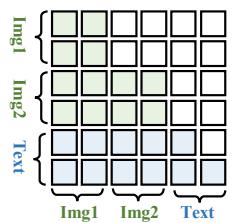
(2) Native Attention Figure 2: Overview of native rotary position embeddings and spatial-t
(2) Native Attention Figure 2: Overview of native rotary position embeddings and spatial-t(2) Native Attention Figure 2: Overview of native rotary position embeddings and spatial-temporal attention. It unifies bidirectional spatial interactions within images with causal dependencies across text and video frames via T HW -aware frequency, channel, and index allocation, enabling unified modeling across single-image, multi-image, and video understanding.这张图概括 From Pixels to Words -- 的整体方法流程。阅读时先看模块之间传递的训练信号,再看作者如何把目标拆成可优化的子问题。
核心问题

它和通用视觉自监督的关系在于:原生 pixels-to-words one-vision 模型,直接挑战“预训练视觉 encoder + LLM adapter”的主流 VLM 拼接范式。

方法拆解

原生 pixels-to-words one-vision 模型,直接挑战“预训练视觉 encoder + LLM adapter”的主流 VLM 拼接范式

主要贡献

高相关;详见方法、贡献和实验边界。

实验看点

实验部分建议重点看两类证据:一是作者是否把方法收益和更强数据、更长训练、更大模型区分开;二是跨模型、跨数据或跨任务迁移是否还能保留同样趋势。

局限与读法

这篇论文的结论需要结合任务设置、训练数据规模和消融实验一起看;不要只凭单个指标判断它对通用视觉表征的价值。