Geometry Matters:它和通用视觉自监督的关系在于:用 3D foundation priors 补 DINO/Stable Diffusion 2D 特征的几何盲点,适合关注 foundation feature 后训练
中高相关;详见方法、贡献和实验边界。
Geometry Matters: 3D Foundation Priors for Learning Semantic Correspondence arXiv 原文链接
编号2605.30093优先级P1类别Visual SSL / representation会议arXiv方法用 3D foundation priors 补 DINO/Stable Diffusion 2D 特征的几何盲点,适合关注 foundation feature 后训练来源arXiv / OpenReview
先说结论。它和通用视觉自监督的关系在于:用 3D foundation priors 补 DINO/Stable Diffusion 2D 特征的几何盲点,适合关注 foundation feature 后训练。 中高相关;详见方法、贡献和实验边界。
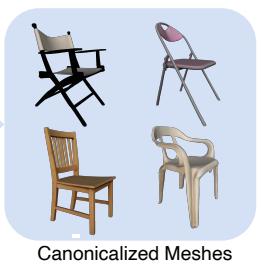
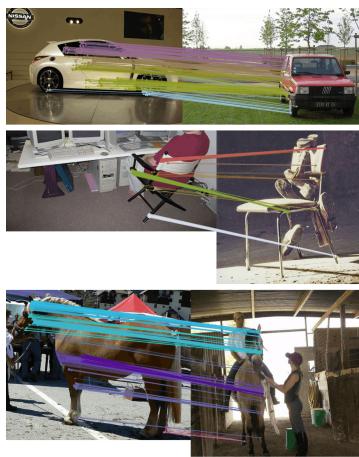
Figureure 2 · : Canonicalized 3D object reconstruction pipelineFigure 2: Canonicalized 3D object reconstruction pipeline. Given an image, we obtain an instance mask and a mesh from foundation models. We then refine the mesh pose via a two-phase render-andcompare optimization based on a distance-transform (DT) and a soft-IoU phase. Finally, we resolve the residual four-fold yaw ambiguity by rendering the mesh at eight known orientations and applying OrientAnything V2 with majority voting to select the canonical yaw correction $\Delta \psi ^ { * }$ .这张图概括 Geometry Matters 的整体方法流程。阅读时先看模块之间传递的训练信号,再看作者如何把目标拆成可优化的子问题。(c) SD+DINO+Partfield + Geodesic Filtering(c) SD+DINO+Partfield + Geodesic Filtering. Figure 1: 3D foundation priors improve both candidate generation and filtering of semantic correspondences. Existing zero-shot pipelines based on SD+DINO (a) suffer from left–right and repeated-part confusion, producing many incorrect matches. Adding our geodesic filter (b) removes wrong matches but is bottlenecked by feature quality, often leaving few surviving correspondences. Adding PartField features (c) yields dense and accurate correspondences even with large pose changes.这张图概括 Geometry Matters 的整体方法流程。阅读时先看模块之间传递的训练信号,再看作者如何把目标拆成可优化的子问题。
核心问题
它和通用视觉自监督的关系在于:用 3D foundation priors 补 DINO/Stable Diffusion 2D 特征的几何盲点,适合关注 foundation feature 后训练。
方法拆解
用 3D foundation priors 补 DINO/Stable Diffusion 2D 特征的几何盲点,适合关注 foundation feature 后训练