Understanding the Robustness of Distributed:它和通用视觉自监督的关系在于:理论上比较 MIM 与 contrastive learning 在非 IID 分布式自监督中的稳健性,并提出 MAR loss
高相关;详见方法、贡献和实验边界。
Understanding the Robustness of Distributed Self-Supervised Learning Frameworks Against Non-IID Data arXiv new; ICLR 2026; SSL theory/MIM vs contrastive 原文链接
编号2607.02447优先级P1类别arXiv new; ICLR 2026; SSL theory/MIM vs contrastive会议arXiv new; ICLR 2026; SSL theory/MIM vs contrastive方法理论上比较 MIM 与 contrastive learning 在非 IID 分布式自监督中的稳健性,并提出 MAR loss来源arXiv / OpenReview
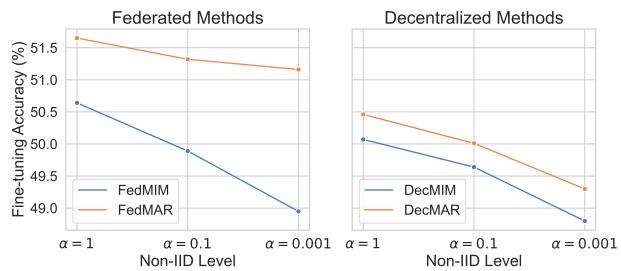
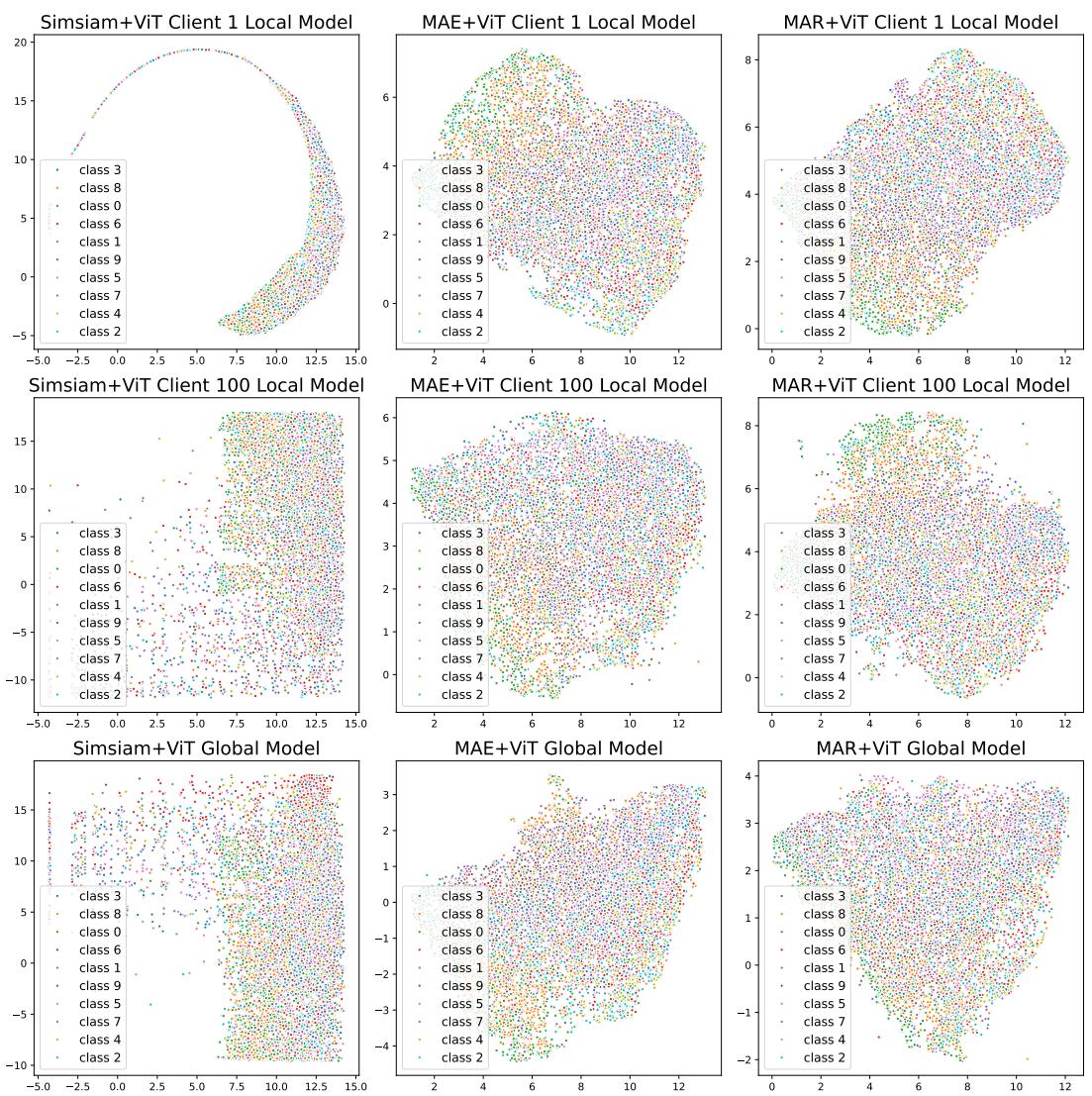
(b) Figure 2: (a) Impact of the average connectivity between clients on the non-IID robust(b) Figure 2: (a) Impact of the average connectivity between clients on the non-IID robustness. Models are pre-trained in a network with 20 clients and then fine-tuned on CIFAR-100. The blue line shows the results of DecL, and the orange line shows FL results. (b) Comparison of MAR and MIM loss on robustness to data heterogeneity in federated and decentralized settings.这张图/表用于判断 Understanding the Robustness of Distributed 的实验收益来自哪里。重点看替换、消融或跨模型设置下趋势是否一致,而不是只看单个最高分。Figureure 3 · : Visualization of the feature space of local and global model in Non-Figure 3: Visualization of the feature space of local and global model in Non-IID setting. Each column stands for a D-SSL framework (i.e., pre-training ViT by Simsiam, pre-training ViT by MAE, and pre-training ViT by MAR). The first row shows the local feature space from client 1, the second row shows the local feature space from client 100, and the last row shows the global feature space.这张图概括 Understanding the Robustness of Distributed 的整体方法流程。阅读时先看模块之间传递的训练信号,再看作者如何把目标拆成可优化的子问题。
核心问题
它和通用视觉自监督的关系在于:理论上比较 MIM 与 contrastive learning 在非 IID 分布式自监督中的稳健性,并提出 MAR loss。
方法拆解
理论上比较 MIM 与 contrastive learning 在非 IID 分布式自监督中的稳健性,并提出 MAR loss